Boko Haram has returned most of the schoolgirls it kidnapped last month to the village it abducted them from, according to relatives of the girls.
Members of the radical militant group drove into Dapchi, a village in north-east Nigeria, and dropped off many of the 110 girls they had abducted a month earlier, apologising to their parents and shaking their hands before driving off.
“Dapchi is full of joy,” said Mohammed Mdada, a vigilante who saw the girls being whipped as they were driven away. “Boko Haram men brought back the girls this morning.”
Hafsat Abdullahi confirmed by telephone that her 16-year-old sister, Fatima, who had been taken, had been dropped off in Dapchi, their village. She put her sister on the phone.
“It took us three days to get back to Dapchi,” said Fatima. “We were divided into three groups and flown in planes, and taken over rivers in boats.”
Parents of other children confirmed the news.
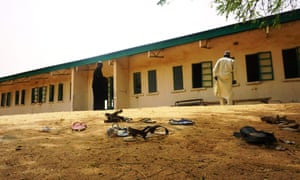
Fatima and 109 other girls from the Government Girls’ Science and Technical College in Dapchi were herded into trucks on 19 February by armed militants who pretended they were soldiers.
Not all of the girls survived. Five were trampled to death in the overcrowded trucks as they were being driven away, according to Mdada.
“Five of them were killed on the day they were taken,” he said. “They were trampled to death because the vehicle they were in was too crowded.”
He described how the militants apologised, saying they had targeted the girls because they thought they were Christian, not Muslim.
“Boko Haram shook hands with the parents and apologised for abducting them. They said that if they knew they were Muslim girls, they wouldn’t have abducted them,” he said. “They spoke in the Kanuri language and were dressed in black turbans, and they’d dressed the girls in cream hijabs.
“They warned the girls that they should stay away from school and swore that if they came back and found any girl in school, they’d abduct them again and never give them back.”
Boko Haram, the group that has killed tens of thousands and displaced millions in the Lake Chad region, is opposed to what it perceives as western-style education.
Usman Mataba, whose niece was among those returned, said he got a call early in the morning from the security adviser to the Yobe state government, asking him to check if the girls had been returned to Dapchi.
“I went out to check, and met Boko Haram in the middle of the town, close to the police station,” he said. “They were shouting that all the parents should come and pick up their kids, but people were running away from them.
“I approached them and they told me that they had brought all the girls except six – that five had died on the day they were taken. They said they discovered they were dead when they arrived at their destination, so they buried them.
“They brought the girls in three vehicles, in three batches, and dropped them off close to the police station. The police said they were aware [that Boko Haram would return the girls that morning] and had been deployed to the school.”
Boko Haram militants even stopped to change a tyre before driving back the way they had come, he said.
“One of their tyres had got a puncture and they came down and changed it right there, not far from the police station.”
In the aftermath of the Dapchi attack the Nigerian president, Muhammadu Buhari, had said that his government would negotiate with the militants, but in a statement on Twitter, said that there had been “backchannel” negotiations and that no ransoms had been paid.
“Nigeria prefers to have schoolgirls abducted by Boko Haram from Chibok and Dapchi back alive, and that is why it has chosen negotiation, rather than a military option,” the presidency said after a meeting with the then US secretary of state, Rex Tillerson, who has since been sacked.
This raises the question of whether something was given in return for the girls’ release; the Nigerian government held several Boko Haram commanders who could have been handed over as barter.
The girls are being held at the hospital in Dapchi and their parents are not being allowed in to see them.
“They took all of them to the hospital, Fatima is in the hospital now,” Hafsat said later, waiting at home to see her sister. “I heard that the chief of staff of the army is here and wants to take the girls with him to Damaturu. I don’t like that – I want her to stay.”
Speaking of one of the girls who was not returned, Mataba said the militants had told him she was “still with them” and had to earn her release.
“They said she had refused to cooperate with them, but as soon as she did, they would release her – but he didn’t explain what it was all about,” he said.
Comments